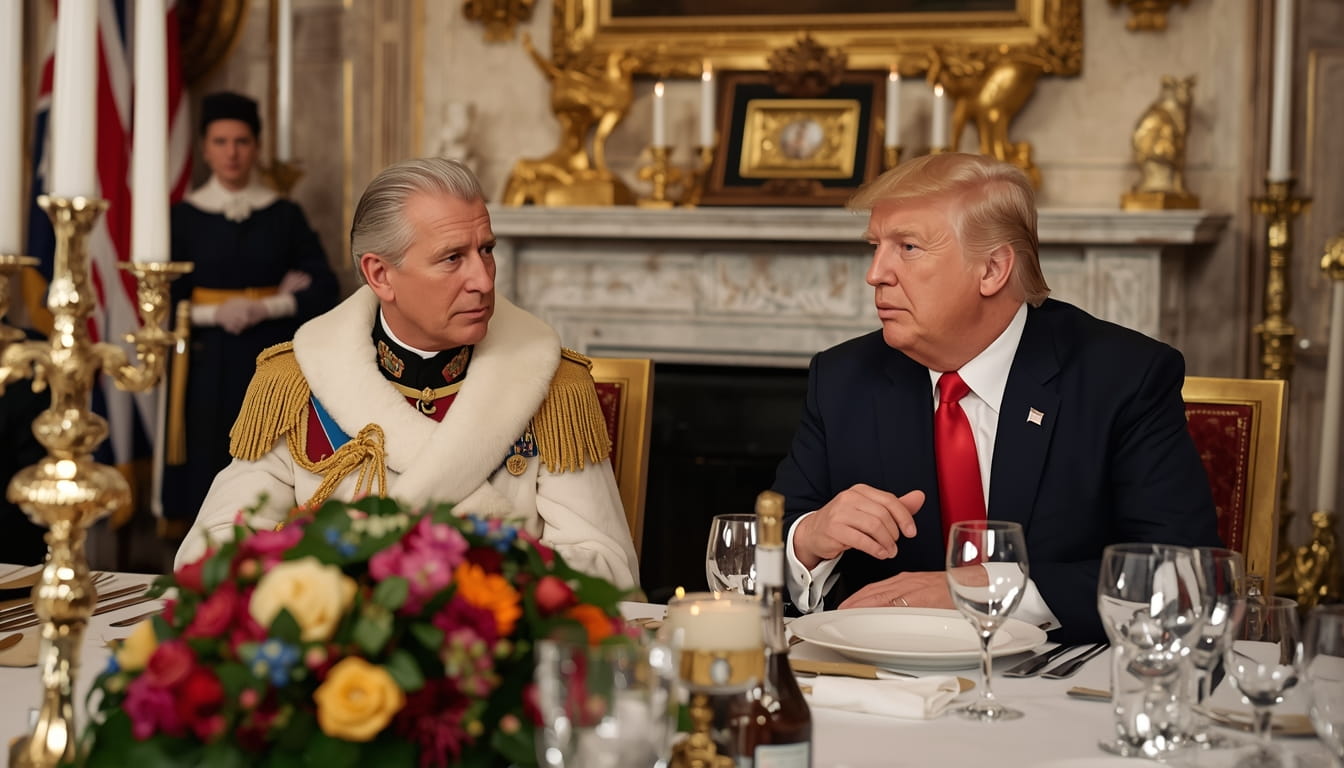
Sources at Buckingham Palace have said there is growing uncertainty about the planned state visit by King Charles II to Washington, DC, later this year, following the escalating conflict in the Middle East and US President Donald Trump’s direct involvement in regional diplomatic issues.
Royal Trip Exposes itself to Postponement Risk
The visit, intended to enhance transatlantic relations amid global turmoil, is now in limbo following recent developments in the Iran-Israel tussle. It is indicated that the King’s itinerary may be postponed or even changed if the situation worsens further and global oil and gas prices rise due to attacks on energy infrastructure, as world leaders urgently call for a de-escalation.
Palace officials are following up on the crisis and weighing the symbolic value of the trip against the risks it might pose to the monarch and other foreign policy goals. Such a delay would be a rare change of long-planned royal commitments, the vagaries that international relations appear to have taken.
The Middle East: Trump’s Role is Complicated
The boisterous statements of President Trump on the conflict, such as the desire to quickly solve the conflict and participate in negotiations, have complicated the planning process. The attention of his administration to the reopening of major shipping routes, such as the Strait of Hormuz, has elicited UK interest, and British military experts have been reported to be aiding US efforts. Nonetheless, this has caused controversy in Westminster concerning the timing of the high-profile royal travel to the US.
Prime Minister Keir Starmer addressed the matter indirectly during recent debates in parliament, noting that the region needed to be stable but making no direct comments on the royal timetable. Opposition leaders have raised the question of whether local economic demands stemming from rising energy prices should take priority over international relations.
Impact on UK-US Relations
The potential stalling is at a crucial point in bilateral relations, as there have been talks regarding trade, security relations, and how to address global challenges. King Charles’s visit was perceived as an opportunity to strengthen both personal and institutional ties between the two countries, rooted in their historical alliances.
There have been divided reactions, with some saying the reaction is understandable given the turbulent background, whereas others consider any change a derailment of the projection of soft power. Royal observers note that the King has been keeping a low profile by leaving the country over the past few years due to his health, thereby making his schedule more flexible.
Wider Background of Royal Activities
This has occurred after another sequence of revisions of the royal calendar due to externalities. Palace teams are reported to be drawing contingency plans, such as virtual options or resettling to a more favourable time.
The question of whether the visit will proceed as scheduled or be added to the list of diplomatic efforts redefined by geopolitical realities continues to be a focus of attention in the Middle East as the situation develops. As of today, the ambiguity highlights how swiftly the world events may affect even the most conservative spheres of statecraft.
The focus of most people now is on their homes, but the role of the royal family in demonstrating stability amid the turbulence does not leave anyone indifferent across Britain and beyond.